
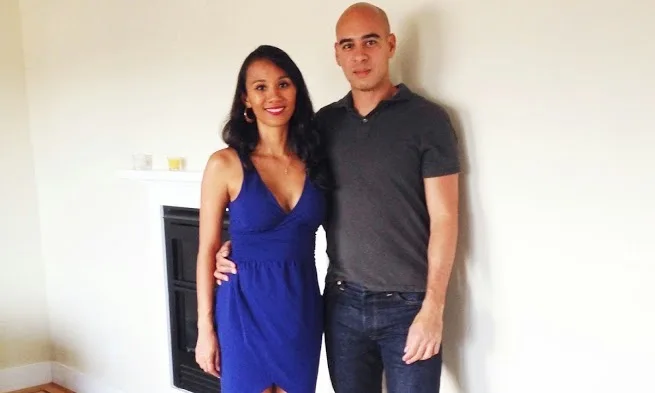
I’ve been happily married 11 years, and I’m still as in love with my beautiful wife Eva now as when I first fell for her 13 years ago.
That’s not to say we don’t have our problems and arguments, but we’re getting better and better at making our marriage work.
I realize there are lots of people who have been happily married four, five, six times as long as us. And I bow to them, knowing that I still have lots to learn.
A young friend of mine told me recently that he’s engaged, after only starting to date a very short time ago.
Marriage is hard work, and getting married young means you have the odds stacked against you. But my friend is intelligent, determined, adaptable, honest and good-hearted, so he’s got a chance and I wish him happiness.
I had a failed young marriage, which I now think was not the fault of either me or my ex-wife, but it taught me that I had a lot to learn and made a lot of mistakes.
I’ve applied the lessons to my first failed marriage to helping make my second marriage successful.
I offered him the following thoughts on making a marriage work:
1. Learn to resolve disputes and problems with the other person’s heart in mind

The most important thing is to be able to talk about problems and feelings calmly and with the other person’s interest at heart – not just wanting to be right.
If you’re going to make your marriage work, you’ll have to figure out how to talk about tough things.
This means you both have to try to see it from the other person’s perspective and find a solution that will work.
You’ll likely be bad at this in the beginning.
Whether your marriage will last depends on your ability to come back together after a fight and figure out how to get better at communicating/resolving things the next time.
Eva and I have gotten much better at not blowing up over things like we used to, but we still struggle.
Recently we’ve come up with a system for resolving arguments.
We have a mandatory cooling-down period (say, 2 hours).
Then, we talk about it starting with a neutral description of the situation and what happened.
We each share our own feelings about the situation and acknowledge the other person’s feelings.
Then we put aside wanting to be right and then focus on finding a solution that will work for both of us.
Afterwards, we do a review of how we did with the resolution process. To be honest, we are still figuring this out.
RELATED: The Three Words That End Every Argument (Hint: It’s Not “You’re Right”)
2. What conflict is actually about

Most disputes are about two things: do you care about me, and can I trust you
When you argue about putting the toilet seat down or whether we should go to the in-laws’ for Thanksgiving, it’s only partly about those actual things.
What it’s really about is this:
“I care about the toilet seat (or going to my parents’ house for dinner), so can you show me you care about what I care about?”
If you ignore the other person’s desires (continually leave the toilet seat up when they ask you not to), then you are signaling you don’t care about what they care about.
This is really about:
“I’ve given you my heart and opened up to you, so can I trust you with it? Will you reject me?”
Unfortunately, most people don’t recognize this and sometimes think the other person’s concerns are silly, so they dismiss the issue.
The other problem is the person who cares about it doesn’t explicitly say they care about it and want the other person to care. This is implied.
They just hope their partner gets the message.
So the responsibility is on both partners to figure this out.
I should note that ideally, the care and trust of the other person doesn’t need to be continually tested and questioned– you just know it.
That’s not always the case and it often takes time to build that trust.
3. Finances are the biggest source of friction for most couples

Finances are an emotion-packed way to show what’s important to people.
For example, when you think you’re talking about whether you want to buy a boat, you’re actually talking whether you want a certain kind of lifestyle.
Do you value their point of view?
Do you respect their opinion on things?
Do you care more about the boat or your relationship?
And so on.
There’s a lot that goes on under the surface of in financial conversations that most people don’t realize is there.
That’s why bringing it out in the open is a smart move.
4. Intimacy is another source of friction

When a couple’s preferences are the same, all is well, but when things change in the bedroom, it’s easy for one person to feel frustrated while their partner feels like they’re not enough somehow.
It’s easy for someone to start feeling unappreciated and only wanted for their body, for example. When it’s not true.
That’s why being able to work out how to resolve these differences is an important skill.
5. Don’t have kids early on

One of the most wonderful people in my life is my daughter Chloe, who I had young and in the earliest stage of my first marriage.
I wasn’t even 20 years old yet. I am incredibly glad I had her.
That said, for other young couples I recommend waiting to have children.
Learning how to make a marriage work is much, much harder when you add the pressure of kids to the equation.
Get good at the relationship first before even considering a kid.
Get to know each other’s values around parenting really well, before diving into parenthood.
Having a kid is pretty much irreversible. I know lots of people (myself included) who grow apart or fall out of love with their partner, split up, only to leave the kid in a split home.
If you have a kid together, you have to deal with the ex-spouse for the rest of your life, even if you hate each other.
I’m lucky in that my ex-wife and I get along, but it’s often not that easy.
6. Get good at being alone separately

Get secure in yourselves and each other when you’re apart. A good marriage is not just about being good at being together.
This is important because lots of people aren’t confident in themselves. They look to another person to fill a void and meet their emotional needs.
That ends up being unhealthy in the long run.
7. Make time for each other

Always make time to be together, even when things get out of the honeymoon phase and get more routine. Never take the relationship for granted.
Make weekly dates so you spend time alone together.
Eva and I like to go to dinner alone (without the kids) and take walks together.
8. You will both change

How you feel about the person you fell in love with will be different than how you feel about version of them you love right now. They will be different in 5 years, and more different in 10.
And vice versa — you’re changing. Over time they’ll feel differently about you.
You might have an expectation that your spouse stays the same, and yet they change. This must be resolved.
If not, they will feel like you don’t love them as they are and you’ll be frustrated they are not who you fell in love with. And vice versa.
How do you handle this? Learn this skill:
9. Appreciate the person for who they are

Very often we wish the other person were different, better, more considerate, and instantly know what we want.
Maybe we hope they would match up with some fantasy (strong, tender, caring and romantic, perhaps, or sexy, always passionate about sex, nurturing).
We don’t always realize this is happening, but it can cause lots of problems– resentment, disappointments, and frustrations.
Sometimes I fail but I’ve learned that when I see my wife for who she really is (not who I wish she was) I am happier.
I appreciate her, love her, am not dissatisfied.
You can appreciate the person as they are right now, instead of who you thought they were when you first fell in love, or who they might become later.
Change is ongoing, so the skill of seeing the person as they actually are at this moment is one that you have to practice each day, each year, not just once and then hold the picture in your head.
When you can appreciate the person for who they are, tell them. Show them.
Showing your appreciation means more than you might realize.
So that’s what I’ve learned about how to make your marriage work.
It’s only a start, and I’m still learning. Marriage is lot of work, and there will be struggles.
But that’s the best thing: the pleasant days when all is well are amazing, but in the struggles you both grow as people, you learn. You can find a path to growing closer.
I don’t know what the future holds for my marriage, but I know that in this moment, it’s all that I could want it to be.
RELATED: The 7 Deadly Sins In Your Marriage
Originally published at Zen Habits. Shared with permission from the author.